

Deep fun
Notes on the difficult business of enjoyment

Note: I’ve renamed this newsletter to Draft Mode. It’s now a mix of personal essays and professional takes on tech, venture, and the life stuff in between. I now realize that the point of Substack is that it lets you put it all in one place.
Most leisure runs on default mode: doom scrolling, shouting at bars (i.e., the performative simulation of intimacy where 80% of your conversation is “What?”), or watching TV you cannot remember the plot of (but keep watching anyway because quitting would mean admitting the time was wasted, and we can’t have that).
Deep fun is the opposite. It is costly, not in money, but in the currencies of group-chat logistics, patience, and setting a weekend alarm. It is also hard to forget.
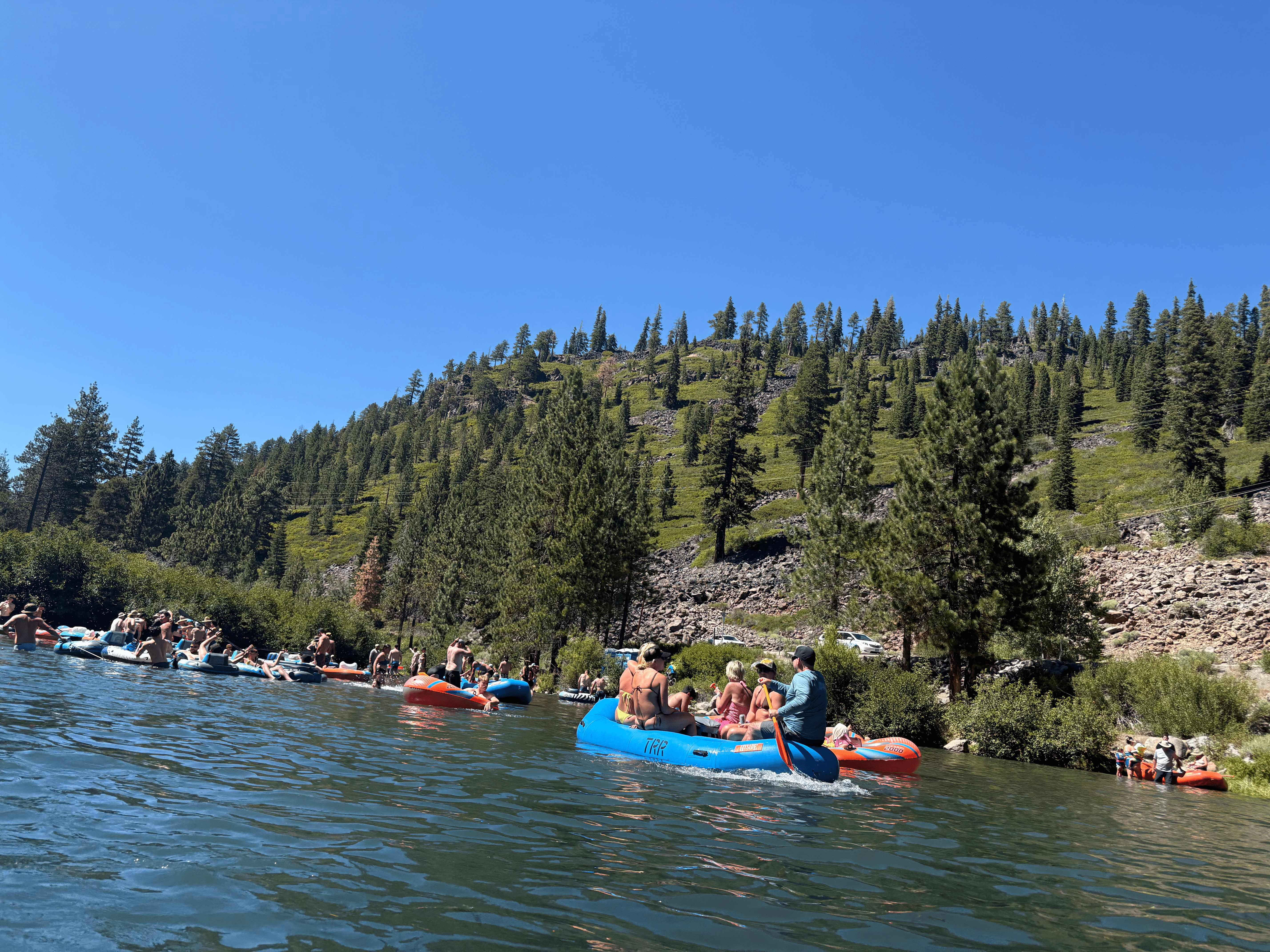
Two weekends ago, we rolled out of San Francisco bound for the Truckee river in Tahoe. C and J did the heavy lifting¹: Rapid River 2 tubes, industrial cords whose operation only looks simple, and running group chat logistics, so the rest of us could coast on vibes and snacks.
By the early afternoon, we were a three-tube “flotilla” drifting past the pines - sun on our faces, cans clinking. Halfway through, Z said, “This beats going to a bar.” On the ride home, he added, “It pays to take fun seriously.”
That line stuck. It’s Cal Newport’s Deep Work idea, except applied to leisure (minus the whole Protestant work-ethic guilt thing). The logic holds: shallow fun, the default bar plan, the half-watched Netflix series you refuse to admit you’ve forgotten, the trance of bottomless scrolling, yields shallow returns. We’ll master keyboard shortcuts to save 0.6 seconds per email but won’t lift a finger for Saturday plans.
Deep fun starts with self-knowledge. I’m solar-powered and conversation-driven; maybe you thrive on full-throated karaoke, pickup hoops until your knees sound like dry twigs, or three-hour Secret Hitler matches that threaten friendships, but in a nourishing way?! The genre doesn’t matter. The knowing does. Once you know your energizers, leisure becomes a design problem.
Of course, naming is free; doing invoices you. Alarms set on weekend mornings, Venmos that hang in limbo like IOUs in a Dickens novel, the dignity you surrender when the AC quits at 33° (Celsius) on the car ride home.
Planning sounds antithetical to fun. It isn’t. The moment we launched, the river took over. Z plugged a punctured tube with his thumb like the Dutch boy holding back the sea. J dove in to “befriend” trout fully clothed. Stories surfaced that you only tell when your phone is zip‑locked in a dry bag and unreachable by algorithm.
Deep fun taxes you on the way in with gear to wrangle, texts to corral, and Subarus to convoy. It rebates you on the way out. You come home river-clean, sun-dazed, with inside jokes lodged in your throat and brain volume turned down a few notches. Weeks later, a photo of that half-deflated tube pings the chat and the entire day returns in HD: pine sap sticky on your fingers, the metallic tang of lukewarm spritzer, the rock you misjudged. This is the compound interest on effort already spent².
So, “drain the shallows.”³ Siphon off the sludge of default leisure. Fun is not self-executing; it has terrible UX. Someone has to pick a date, over-communicate, and risk seeming too earnest (nothing is less cool, and nothing, perversely, is cooler). Life is, after all, punishingly finite.
¹ Power, in any peer group, accrues to whoever books the Airbnb first.
² If this financial metaphor offends you, feel free to swap in “fun compound interest,” though I accept no liability for resultant eye-rolling.
³ Yes, I am moralizing. You hate that I am, I hate that I am, but here we are.